An unencrypted thumb drive.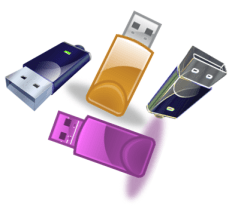
Physically, a thumb drive is a small thing. But financially and organizationally, an unencrypted thumb drive had huge ramifications to a Massachusetts-based dermatology firm.
Why?
Because the thumb drive held the health information of 2,200 patients, and it was stolen from the unattended vehicle of one of the firm’s staff members. Electronic health information is protected by the Health Insurance Portability and Accountability Act of 1996. (Read more about the security lapse here http://www.hhs.gov/news/press/2013pres/12/20131226a.html)
The firm notified its patients, the media and the U.S. Department of Health and Human Services (HHS), but that was just the beginning. To remedy for the lost information, the firm was required to pay a $150,000 fine and complete a detailed and effort-intensive corrective action plan that takes at least 18 months to complete.
Interested in what a corrective action plan might entail? Here’s what the dermatology firm’s resolution plan looks like:
— The agreement with HHS obligates the firm to conduct within one year a comprehensive, organization-wide risk analysis that incorporates all electronic media and systems. In this example, the analysis covers six offices, 10 dermatologists, one surgeon, five nurse practitioners, one physician assistant, three aestheticians plus at least six managers and unknown number of records.
— Then, within 60 days of the analysis, the firm is required to develop a risk management plan to address risks and vulnerabilities and submit the plan to HHS’s Office of Civil Rights.
— If the Office of Civil Rights has any changes to the plan, the firm has 30 days to incorporate those revisions and provide a revised risk management plan and, if changes to the firm’s policies and procedures manual are required, the firm must distribute the new policies, train staff on the revisions and implement the new procedures.
— Meanwhile, the firm must monitor its own compliance and report deficiencies back to Office of Civil Rights. Each report must describe event, staff or persons involved and describe actions taken to address matter. Even if there are no “reportable events,” the firm must report that to the Office of Civil Rights.
Overwhelmed yet?
The corrective action is not yet complete. Once the Office of Civil Rights approves the risk analysis, the plan and the revisions, the firm has 60 days to submit an implementation report. The implementation report must include the following:
— The firm must describe how it implemented its security management process and updated its policies and procedures.
— An officer of firm must attest that revised policies and procedures have been implemented and that staff has been informed of them and, if necessary, trained on them.
–The report must contain a summary of all reportable events and corrective and preventative actions.
The correction action plan also requires the firm to retain related documents for three years.
All because of an unencrypted thumb drive.
For a look at the actual resolution agreement involved in this case, you can find it here http://www.hhs.gov/ocr/privacy/hipaa/enforcement/examples/apderm-resolution-agreement.pdf .
If you’re interested in improving your company’s security so you can avoid fines and corrective action like those experienced by the dermatology firm or if you need assistance in navigating a corrective action plan, RISC Management can help. RISC deals with privacy and security issues, workforce training, protected health information and electronic protected health information, and our firm is well-versed in risk analysis and compliance issues. Contact us today: Sales@RISCsecurity.com or 630-264-1472

 RISC Management and Consulting
You must be logged in to post a comment.